LAUNCH - 2
Mariam Chikuse was twelve years old when she first walked out of the school gate and did not come back.
It was the start of the planting season, and her mother, Aisha, was alone with five children and a field that needed more hands than she had. Her husband had left for work in the city two years earlier. The money he sent, when it came at all, never lasted until the next month. Fees, a uniform, a pair of shoes, a notebook for each subject: these were small things on a list, but together they were more than the household could carry. So Mariam stayed home, and her younger sisters walked to school without her.
"I did not stop wanting to learn," Mariam says, sitting on a mat outside her family's house in a village in Lilongwe rural. "I just stopped believing it was for me."
She is eighteen now, and the person who sits across from you is not the quiet girl who spent two seasons weeding maize and fetching water. She speaks clearly, she asks questions back, and she is careful to explain that none of what happened to her happened by luck. It happened because a number of people in her community decided, one conversation at a time, that a girl's education was worth protecting.
A visit at the door
The first of those conversations took place on a hot afternoon when a young man named Sheikh Yusuf Phiri stopped at Aisha's house. Sheikh Yusuf is one of the imams trained through the Muslim Initiative for Development's Imam Daee mentorship programme. The programme works with religious leaders who already hold the trust of their communities, and equips them to talk openly about education, health and the protection of children. In the villages where MID works, an imam is often the first person a family turns to when something goes wrong, and the one whose words carry the most weight on a Friday.
Sheikh Yusuf did not arrive with a lecture. He sat down, accepted a cup of water, and asked about the harvest. Only after a long while did he ask about Mariam. Aisha, embarrassed, explained that there was no money for fees. She said it quietly, the way a person admits something they feel they should have been able to prevent.
"He told me that in our faith the pursuit of knowledge is a duty for every believer, men and women alike," Aisha remembers. "He said a girl who can read can read the Quran for herself, and she can read a medicine label, and she can read a contract before she signs it. I had never thought of it like that. I had only thought of school as a cost."
Sheikh Yusuf then told her about the girl child education support that MID runs with local partners: a bursary covering school fees, uniforms and learning materials for girls at risk of dropping out, and a mentor who checks in regularly so that the girl does not fall behind or fall silent. He did not promise anything. He offered to walk with her to the village meeting where the community committee, a group of parents, teachers and elders, reviews each application.
The committee approved Mariam's place that week.
Going back
Returning to school after two seasons away was harder than Mariam had expected. She was older than the other girls in her class, and she had forgotten how to sit still for a whole lesson. Her handwriting had gone rough from months of farm work. In the second week she almost stopped again.
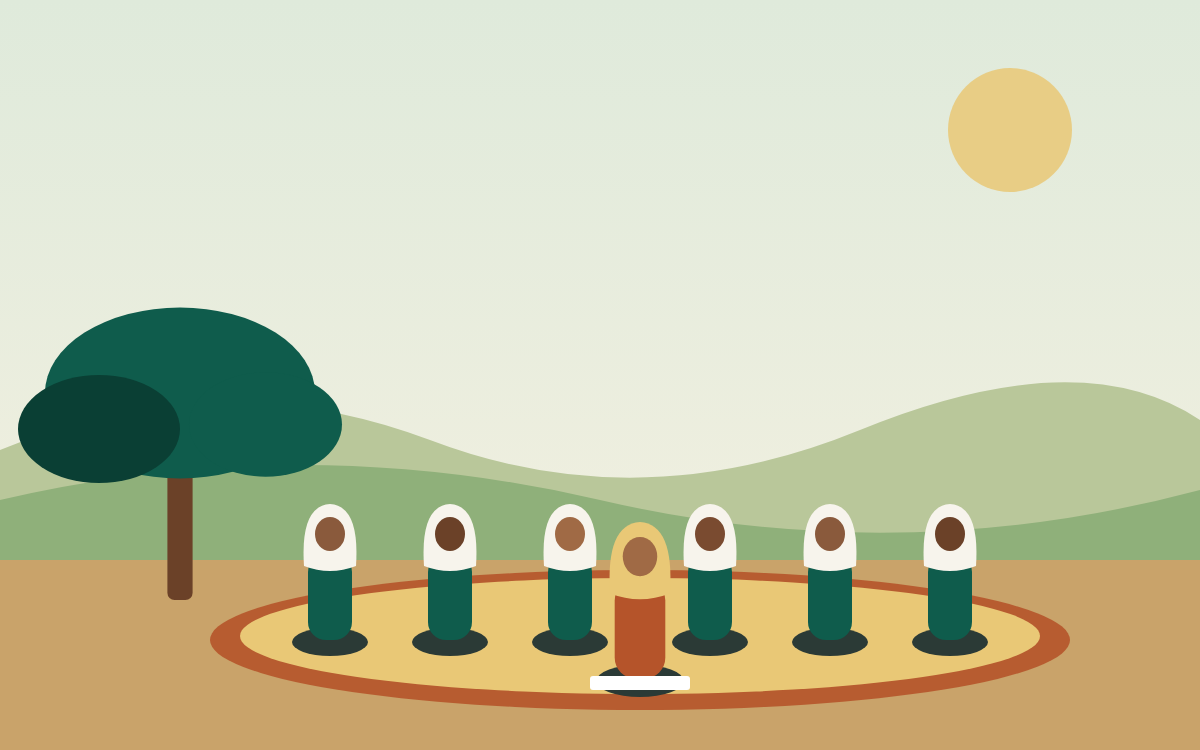
What kept her there, she says, was a woman named Chimwemwe Banda, a mentor from the programme who met her and five other girls every Thursday after classes. Chimwemwe did not teach mathematics or English. She listened. She asked the girls what had been hard that week, who had teased them, what they were afraid of. Then she helped them find a way through it.
"She never told me everything would be easy," Mariam says. "She told me that I was allowed to be behind, and that being behind was not the same as being finished."
The mentoring sessions covered more than school. Over a term the girls talked about how their bodies were changing, about saying no to pressure from older boys and men, about what a healthy relationship looks like and where to go for help if something happens that is not right. MID's integrated health work supports this kind of open, age-appropriate conversation, including sexual and reproductive health information, because the organisation has seen that girls leave school for many reasons, and early pregnancy and early marriage are among the most common.
At home, something was shifting too. Sheikh Yusuf kept visiting. He spoke at a Friday gathering about the responsibility of parents to keep their daughters in school, and afterward two other mothers came to ask Aisha how she had managed to arrange it. Mariam's younger sister Zainab, who had been quietly dreading the day her own fees came due, began to hope that she would not have to stop either.
By the end of her first year back, Mariam had moved from the bottom third of her class to the middle. By the end of the second, she was near the top in English and science. She tells this part without boasting, almost as if reporting the weather, but her mother, sitting beside her, cannot hide her pride.
The problem of the field
Education support alone, however, could not solve what had started the trouble. The family still depended on a single small plot and an uncertain remittance. Even with fees paid, there were days when the household had to choose between a pen and a meal. MID's programmes are built around this understanding: a child's schooling is secure only when her household is secure.
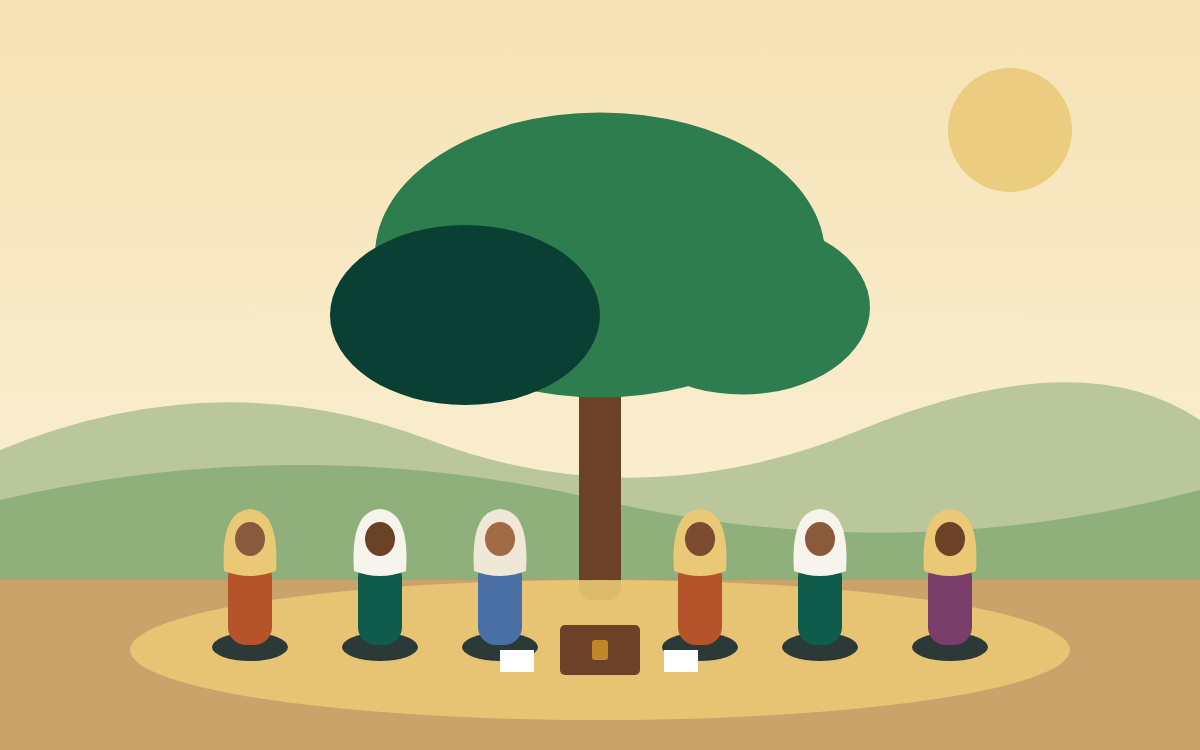
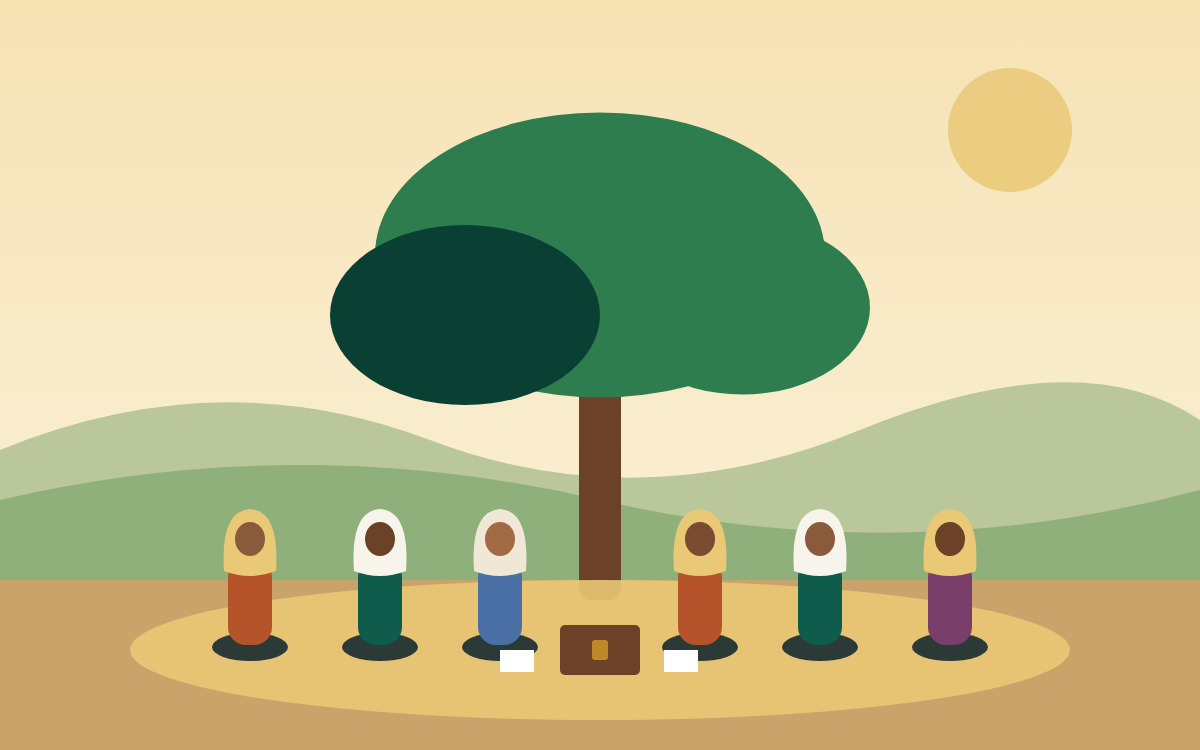
So in the same season that Mariam went back to class, Aisha joined a village savings and loan group supported through MID's economic empowerment and livelihoods work. The group was made up of fifteen women who met every Tuesday under a large mango tree. Each woman brought a small amount of money, whatever she could manage, and placed it in a locked box. The money was then lent, with a modest interest, to members who needed capital for small ventures. At the end of each cycle, everyone received her savings back with a share of the interest.
Aisha was nervous at the first meeting. She could barely contribute the minimum, and she did not know how to keep a record. The group's chairwoman, an older woman named Esnart Mwale, showed her how to use a passbook. A volunteer trained by the programme taught the members basic bookkeeping, how to separate household money from business money, and how to calculate whether a venture would actually turn a profit.
With her first loan, a sum smaller than the price of a school bag, Aisha bought flour, cooking oil and a bag of sugar and began frying mandasi, the small sweet doughnuts that people in Malawi love to eat with tea. She sold them from a table near the trading centre on market days. In the beginning she made almost nothing. Then she began to learn which hours people bought, which neighbours liked them sweeter, and how much she could sell on school days when children passed by in the afternoon.
By the third cycle she had enough savings to buy a second pan and to hire Zainab, her second daughter, to help on Saturdays. By the fourth, she had begun to add chips and boiled eggs. She also did something she had never done before: she opened a small account for the family's own emergency fund, so that the next time a child fell sick or a harvest failed, they would not have to sell what they could not afford to lose.
"The first time I counted my own money at the end of a cycle, I sat down and cried," Aisha says. "Not because it was a lot. Because it was mine, and I had made it, and nobody had to give it to me."
When a clinic was out of reach
Not every challenge was solved by schooling or savings. In Mariam's second year back at school, her classmate Chifundo, a bright and funny fifteen-year-old, stopped coming to class. When Mariam went to her house to ask why, she learned that Chifundo was pregnant.
It was a hard moment, and one that Mariam says she would once have been unable to talk about with anyone. But the Thursday sessions had given her words, and, more importantly, they had given her a place to bring them. She told Chimwemwe, who arranged for a trained health volunteer to visit Chifundo's family and help her reach the nearest health centre for antenatal care. The centre was nearly two hours away on foot, and without that help Chifundo might have delivered at home without a skilled attendant.
Chifundo had a safe delivery. With the support of her family, the school and the girls' mentor group, she returned to class after her baby was born, something that would have been unthinkable in the village only a few years earlier.
"I learned that when something goes wrong, the answer is not silence," Mariam says. "The answer is to bring it to someone who can help, and to bring it early."
This is the quiet, practical side of MID's integrated health work. It is not only about clinics and campaigns. It is about making sure that the people closest to a young woman, her mentor, her imam, her mother, her friends, know where help is, and are willing to point toward it without shame.
A seat at the table
The change that surprised Mariam most came in her final year of secondary school, when the district development committee announced a public forum on how local education funds would be spent. MID's governance and civic education work trains young people and community members to take part in these meetings: how to read a budget summary, how to prepare a question, how to speak respectfully but firmly to people in authority.
Mariam had attended one of the training sessions. She had never expected to use it. But on the day of the forum, sitting at the back of a crowded hall with her notebook on her knees, she heard an official describe a plan to repair a block of classrooms at a school on the far side of the district, while the primary school in her own village, where her sisters studied, had no roof over two of its rooms and no desks for the youngest pupils.
She raised her hand. Her heart was beating so hard that she was sure the whole room could hear it.
"I said who I was, and I said which school I was speaking about," she recalls. "I said the children in our village sit on the floor during the rains and the classrooms flood. I asked if it could be added to the plan."
The room went quiet. Then the chairperson thanked her and asked a clerk to note the request. Three months later, a team arrived to assess the school. By the next term, the two damaged classrooms had been repaired, and a delivery of desks had been scheduled.
Mariam did not claim credit. She is quick to say that the request was supported by the school's head teacher, by the parents' committee, and by a number of other voices who had been raising the same concern for years. But she also knows that a young woman who a few years earlier had left school quietly, convinced it was not for her, had stood up in a district hall and been heard.
What comes next
This year, Mariam sat her final secondary school examinations. Her results are not yet out, but she has already begun making plans. She would like to train as a primary school teacher, and she has a particular school in mind: her own.
"I want to be the person who stands at the door when a girl is thinking of leaving," she says. "I want to say to her what was said to me. That she is allowed to be behind. That she is not finished."
Her sister Zainab is now in Form 2, and has told her family she wants to be a nurse. Aisha has expanded her small business and now sells her mandasi at two markets. She has also been elected treasurer of her savings group, a role she describes with the seriousness of a person guarding something precious. Sheikh Yusuf still visits the household from time to time, and still asks about the harvest first.
Stories like Mariam's are never the result of a single intervention. They are the result of a web of small decisions made by many people: an imam who chose to sit and listen, a mentor who gave up her Thursday afternoons, a committee that read an application carefully, a group of women who put their coins into the same box, a health volunteer who walked two hours, and a family that decided, together, that the girl in their house was worth the effort.
That web is what MID's work in education, health, economic empowerment, livelihoods and governance is trying to build in communities across Malawi, one household at a time. It is slow, and it is not always dramatic. But when it works, it changes what a girl believes about her own future, and in doing so, it changes what the next generation of girls will believe too.
If this story moved you, there are ways to take part. You can support a girl's education, volunteer your time and skills, partner with MID as an organisation, or simply share this story with someone who might need to hear it.
Note: names and some details in this story have been changed to protect the privacy of the people involved.